
Is Legacy Builders Program an MLM or Pyramid Scheme? The Real Answer.
A plain-language breakdown of what MLM actually means, and why Legacy Builders Program doesn't fit the definition.
- Written by Phil Wilson
- June 11, 2026

The MLM and pyramid scheme question is the first objection that comes up in nearly every Legacy Builders Program comment section. It’s a fair question. The program involves buying something and then having the option to sell it to others, which on the surface looks like it could fit the pattern. It doesn’t, and this article explains exactly why.
This is the full breakdown: what MLM actually means legally, what a pyramid scheme requires, how Legacy Builders Program works mechanically, and where the confusion comes from.
Key Takeaways
- Legacy Builders Program is not an MLM. There is no downline, no recruitment requirement, and no income tied to who your buyers recruit after they purchase from you
- A pyramid scheme requires recruiting to be the primary income mechanism. Legacy Builders Program income comes from selling a digital product
- The FTC’s primary test for MLM vs legitimate direct sales is whether income depends on recruitment or on product sales to end customers. Legacy Builders Program passes that test
- BehindMLM has reviewed the program. Their concern is with the resell model generally, not a finding of illegal activity
- The confusion comes from the fact that buyers can also resell, which creates surface similarity to MLM without the defining structural features
Exclusive Bonus: The Legacy Builders Program Accelerator
If you decide to move forward, purchasing through this site includes the Legacy Builders Program Accelerator bonus package, including a done-for-you sales funnel and SEO traffic training.
What Is an MLM? (The Legal Definition)
MLM stands for multi-level marketing. The defining feature of an MLM is a compensation structure where your income depends not just on your own sales, but on the sales made by people you recruit, and the people they recruit after that. This creates a hierarchical structure (the “downline”) where people above benefit financially from the activity of people below them.
The FTC distinguishes legitimate direct sales from problematic MLM structures based primarily on one question: is income generated by selling real products to real end customers, or does it primarily come from recruitment? Programs where recruitment is the primary income driver are considered pyramid schemes regardless of what product or service is nominally involved.
Legitimate MLMs do exist and operate legally. The structural concern is specifically about programs where the math only works if you keep recruiting, not ones where participants earn primarily by selling products to people who want to buy them.
What Makes Something a Pyramid Scheme?
A pyramid scheme in its pure form involves no real product. You pay to join, you recruit others who pay to join, and the money flows upward. These collapse mathematically when recruitment runs out, which it always does. They are illegal in virtually every jurisdiction.
A more sophisticated version involves a nominal product (a course, a supplement, a service) but the real value exchange is the recruitment, not the product. The FTC’s test: if the majority of income to participants comes from recruiting new participants rather than selling the product to end customers, the structure is a pyramid scheme regardless of the product wrapper.
This is the version that sometimes gets conflated with programs like Legacy Builders Program. The presence of a real product doesn’t automatically clear a program, but the source of income does. If you’re earning by selling a product to buyers who want the product, that’s a different structure than earning by recruiting people into a downline.

How Legacy Builders Program Actually Works
Here is the actual mechanics of the Legacy Builders Program model.
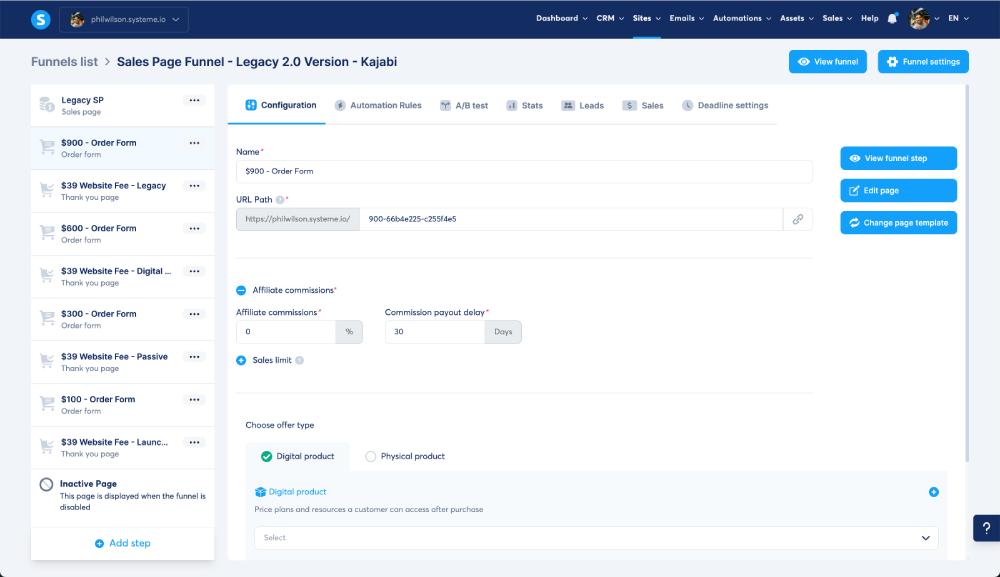
You pay for a tier of the program ($100, $300, $600, $900, or $1,400). You receive the training content for that tier and all tiers below it. You also receive master resell rights (MRR), which is a legal license giving you the right to sell the same product to other buyers and keep 100% of the sale price.
When you make a sale, your buyer gets exactly what you got: the training content and the resell rights. They are a customer. They can use the training, they can sell the product themselves, or they can do both. What they do after purchase has no financial effect on you. You do not receive a commission from their sales. They do not become your downline. There is no upward income flow from their activity.
Your income comes entirely from your own sales. The number of people you recruit is irrelevant because there is no recruitment structure. You sell, you get paid, transaction complete.
Why People Think It's an MLM
There are two reasons this comparison comes up consistently.
First, the fact that buyers can also become sellers creates the visual appearance of a chain. Person A sells to Person B who sells to Person C. That looks like a downline to someone who hasn’t looked at the mechanics. But there’s no financial connection between A and C. A gets nothing when B sells to C. The chain is sequential customers, not a hierarchical compensation structure.
Second, skeptics of the resell model (including BehindMLM) point out that the majority of buyers in programs like this won’t generate income. That’s a fair concern about the marketing around the program and about the realistic success rate for resellers. It’s not the same concern as “this is a pyramid scheme.” The BehindMLM concern is about overstated income potential, which is a different issue with a different answer.
The short version: it looks like an MLM to people who haven’t seen the payment structure. Once you understand that there’s no downline and no recruitment commission, the similarity disappears. For the related scam question, see this article.
What the FTC Would Look For
The FTC’s primary guidance on distinguishing legitimate direct sales from pyramid schemes focuses on whether participant income comes primarily from recruiting others or from selling products to end customers.
In Legacy Builders Program: income comes from selling a digital product. The buyer is an end customer who receives training in exchange for payment. Whether they later sell the product themselves does not affect the seller’s income. There is no mandatory recruitment quota, no commission tied to downline activity, and no financial relationship between a seller and whoever their buyers later sell to.
The program is not FTC-reviewed or FTC-approved, and this article is not a legal finding. But applying the FTC’s publicly stated test to how the program actually works, it does not fit the pyramid scheme pattern. The income source is product sales, not recruitment.
The Verdict
Legacy Builders Program is not an MLM or pyramid scheme. It is a master resell rights program, which is a different business model. You buy a digital product, receive a license to resell it, and earn 100% of every sale you make. Your income depends entirely on your own sales activity, not on who you recruit or what they do.
The concerns worth taking seriously are different ones: whether the income claims made by some promoters are realistic for most buyers (they aren’t, for most people who don’t apply the training consistently), and whether the live-session format works for your learning style. Those are fair concerns. The MLM concern, examined against how the program actually works, doesn’t hold up.
Want to See the Full Program?
Frequently Asked Questions
Do you earn money from people you recruit?
No. There is no recruitment structure in Legacy Builders Program. You sell a product, your buyer pays you, transaction complete. What your buyer does after purchase has no financial effect on you. There is no downline and no commission tied to their activity.
Is it like Amway or Herbalife?
No. Amway and Herbalife operate on a commission-on-downline model where your income depends partly on recruiting distributors and their subsequent sales. Legacy Builders Program has no downline structure. You buy a product, you sell that product, you keep 100% of what you earn. The comparison doesn't hold up mechanically.
What does BehindMLM say about Legacy Builders Program?
BehindMLM has reviewed the program and raises concerns about the resell model and whether income claims made by promoters are realistic. They do not conclude it's an MLM or that illegal activity has occurred. Their concern is with the marketing around the program rather than the structure of the program itself. See the full context in the scam question article.
Is there a refund if I change my mind?
No. All Legacy Builders Program purchases are final. Factor that in before buying.